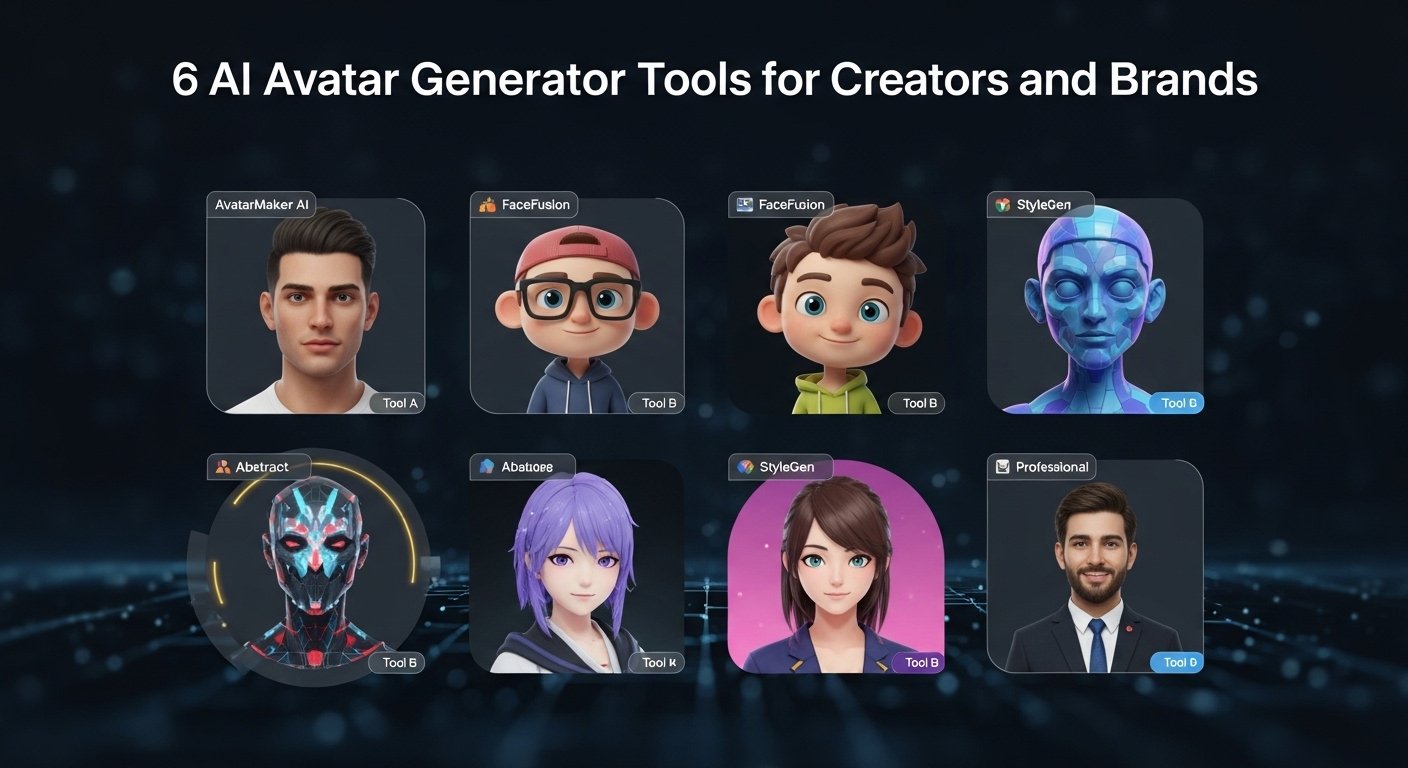
The way creators and brands communicate online is changing rapidly. Video is no longer limited to studios, cameras, or on-screen talent. Today, AI-generated avatars are helping businesses create human-like videos at scale without the logistical challenges of traditional production.
From UGC-style ads and product explainers to personalized brand messages, AI avatars are becoming a practical solution for marketers, educators, and content teams alike. These tools allow brands to maintain visual consistency, reduce production costs, and publish video content faster than ever before.
This article explores six AI avatar generator tools that creators and brands can use to build scalable video content workflows, starting with invideo and followed by other notable platforms in the space.
1. Invideo
Invideo has positioned itself as a flexible platform for creators and businesses looking to produce videos quickly without sacrificing creative control. One of its growing capabilities is avatar-led video creation, designed to support marketing, education, and product storytelling use cases.
What makes invideo stand out is its focus on practical video outcomes such as UGC ads, explainers, personalized messages, and product-focused videos rather than novelty-driven avatar experiences. Users can create a custom avatar and generate videos using text-to-speech, allowing ideas to move from script to screen with minimal friction.
Within this workflow, invideo functions as an AI avatar generator that fits naturally into modern content pipelines, especially for brands that already rely on video for distribution across social platforms, websites, and ads. Instead of replacing creative input, the tool acts as a production layer that speeds up execution while maintaining consistency.
Because invideo combines avatar creation with broader video editing capabilities, it often works as an AI video maker app for teams that want one environment to manage scripts, visuals, and voice-led storytelling without switching between multiple tools.
Best suited for
Creators producing frequent short-form and mid-length videos
Brands running UGC-style ads and product explainers
Marketing teams needing scalable video output without on-camera talent
2. Gan.ai
Gan.ai focuses heavily on personalization, making it particularly relevant for brands that rely on direct communication with their audience. Instead of producing one generic video, users can create avatar-led videos that adapt messaging at scale.
The platform is often used for sales outreach, onboarding, and customer engagement, where addressing viewers directly adds a human layer to otherwise automated communication. Avatars in Gan.ai are designed to feel conversational rather than overly animated, which helps maintain credibility in professional settings.
Key strengths
Personalized video messaging at scale
Natural-looking avatars for business communication
Strong fit for sales and customer success teams
Common use cases
One-to-many personalized outreach
Customer onboarding and retention videos
Internal communication for distributed teams
3. Jogg.ai
Jogg.ai is designed for speed and simplicity, appealing to creators and small teams that want to produce avatar-led videos without a steep learning curve. The platform emphasizes quick turnaround, making it useful for social-first content strategies.
Rather than offering deep customization, Jogg.ai focuses on efficiency. Users can generate videos from text inputs and deploy them across platforms where fast-moving content cycles matter more than cinematic polish.
Why creators use it
Fast avatar video generation
Lightweight interface for quick projects
Suitable for short-form and social videos
Ideal for
Social media managers
Solo creators experimenting with avatar content
Brands testing new formats without heavy investment
4. KreadoAI
KreadoAI leans toward structured, professional video outputs, often used for educational and informational content. Its avatars are built to deliver clarity and consistency, which is important in training, e-learning, and corporate communication.
The platform supports multilingual video creation, making it useful for brands operating across regions. Instead of focusing on trend-driven visuals, KreadoAI emphasizes clarity, making it a reliable option for instructional use cases.
Notable features
Avatars suited for educational delivery
Multilingual video support
Consistent presentation style
Works well for
Online courses and tutorials
Internal training content
Knowledge-sharing videos for global teams
5. TalkingAvatar.ai
TalkingAvatar.ai is centered on conversational avatar experiences. Its avatars are built to replicate human expressions and speech patterns, which can make videos feel more personal and engaging.
This tool is often used where storytelling and emotional connection matter, such as brand narratives, onboarding content, or creator-led storytelling. While it may not focus on high-volume production, it offers more expressiveness in avatar delivery.
Highlights
Expressive avatars with conversational delivery
Emphasis on storytelling and engagement
Simple script-to-video workflow
Best use cases
Brand storytelling
Creator-led narratives
Introductory or welcome videos
6. AvatarSDK
AvatarSDK takes a more technical approach to avatar creation. Rather than focusing purely on marketing videos, it provides avatar generation technology that can be integrated into broader digital experiences.
This makes it appealing to developers, product teams, and brands building interactive applications, virtual assistants, or immersive environments. AvatarSDK is less about rapid content publishing and more about long-term avatar deployment.
Core strengths
High-quality avatar generation technology
Integration-friendly for custom applications
Focus on realism and customization
Suitable for
Product teams and developers
Interactive brand experiences
Virtual assistants and digital humans
How to Choose the Right AI Avatar Tool
Selecting the right AI avatar generator depends less on features and more on how the tool fits into your content strategy.
Content volume and speed
If your team publishes videos frequently, tools that support rapid production and easy iteration will be more practical.
Purpose of the videos
Marketing ads, educational content, and personalized communication all require different levels of realism and customization.
Distribution channels
Short-form social content has different needs compared to long-form explainers or internal videos.
Team structure
Some platforms are better suited for solo creators, while others work best for collaborative brand teams.
Why AI Avatars Are Becoming a Standard for Brands
AI avatars are no longer a novelty. They are increasingly used as a strategic layer in content creation because they solve real problems such as scalability, consistency, and speed.
For brands, avatars allow messaging to stay uniform across campaigns without relying on repeated live shoots. For creators, they reduce dependency on cameras and physical setups while enabling experimentation with new formats.
As tools mature, the focus is shifting from how realistic an avatar looks to how effectively it helps communicate an idea. Platforms that balance usability with creative control are likely to become long-term staples in content workflows.
Final Thoughts
AI avatar generator tools are reshaping how creators and brands approach video production. Whether the goal is marketing, education, personalization, or storytelling, these platforms offer different strengths depending on the use case.
Invideo leads with a creator-friendly approach that integrates avatars into broader video workflows, while tools like Gan.ai, Jogg.ai, KreadoAI, TalkingAvatar.ai, and AvatarSDK cater to more specific needs from personalization to technical integration.
As video continues to dominate digital communication, AI avatars are set to become an essential part of how stories are told at scale without sacrificing efficiency or consistency.